Nature Journaling
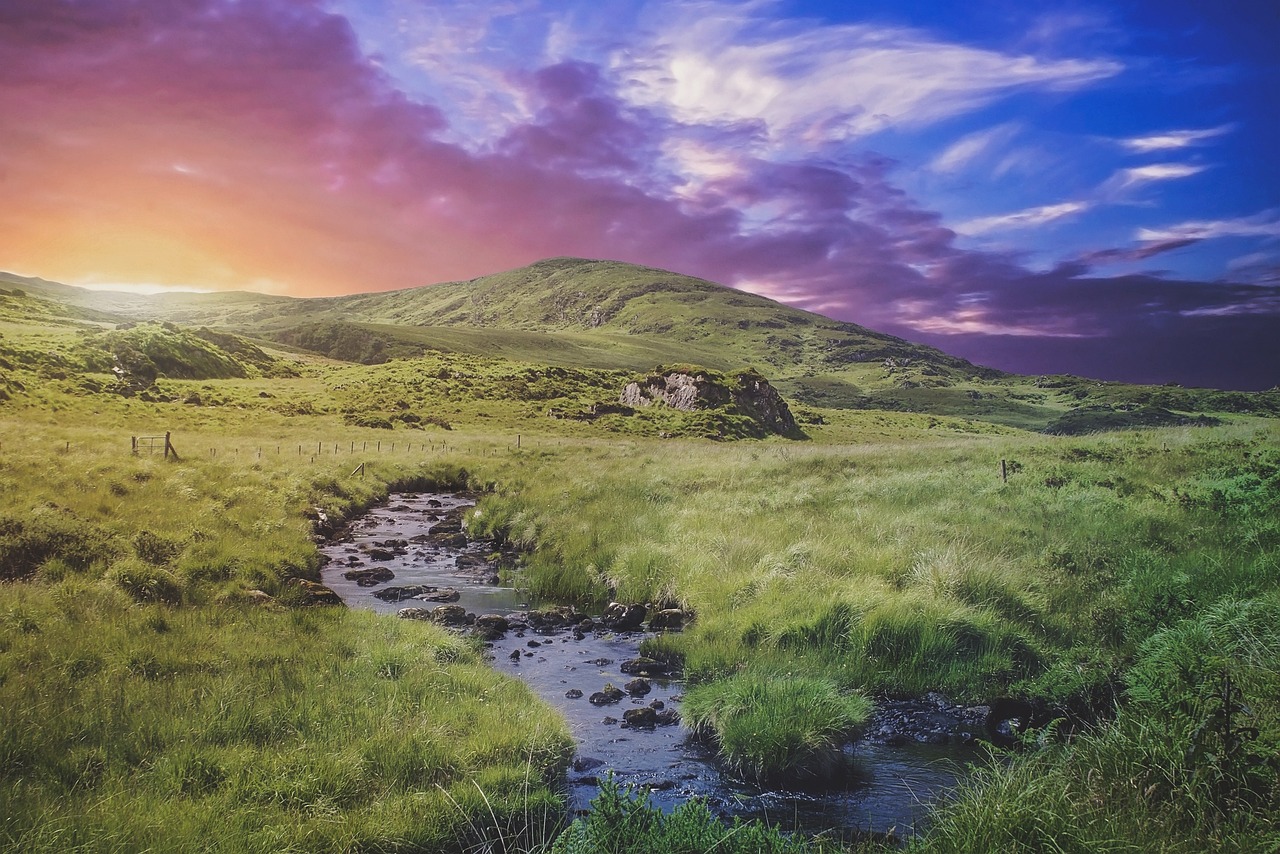
Water is one of the most common things in nature and one of the hardest things to sketch. It moves. It reflects. It's transparent in some places and opaque in others. It has no fixed shape. Beginners often stare at a stream for ten minutes and then draw a flat blue ribbon that looks nothing like what they're seeing.
The good news is that you don't need to capture every ripple to make a convincing sketch of water. You need to capture a few key things: the shape of the water's edge, the direction of the current, and the way light sits on the surface. Get those three right and the eye will fill in the rest.
Start with the banks or the shoreline. These are the only parts of a stream or pond that hold still long enough to draw accurately, and they define the water's shape. Once the edges are in place, you have a container for everything else.
Next, look for the current. Even a slow stream has a direction, and you can see it in the way debris, foam, or surface ripples line up. Don't try to draw every ripple—pick a few and draw them as short, parallel strokes that follow the flow. In fast water, these strokes will be long and angled. In slow water, they'll be short and nearly horizontal. The spacing matters more than the individual marks. Crowded strokes read as turbulence; spaced-out strokes read as calm.
Reflections are the next layer. On still water, reflections are almost a mirror image of what's above. On moving water, they break into horizontal bands. A simple trick is to draw the reflection first as a solid shape, then break it up with a few horizontal lines where the water is moving. You don't need to draw the whole tree reflected in the pond—just the suggestion of it is enough.
One of the most common mistakes is trying to make water blue. Real water is rarely blue. It's usually a mix of whatever it's reflecting, whatever is underneath it, and whatever the sky is doing. In a pencil sketch, that means water is mostly grey—sometimes very light, sometimes very dark, and often both in the same frame.
Look at a pond on a calm day and you'll see that the water near the far shore is usually darker than the water near you, because you're seeing more reflection and less bottom. In a shallow stream, the water over a gravel bar is lighter than the water in a deep pool. These value shifts are what make water read as water. If you get the values right, you can leave the page almost color-free and it will still look wet.
Practice on the simplest water you can find—a puddle, a birdbath, a still pond on a windless morning. Once you can sketch those convincingly, moving water becomes a matter of adding motion lines to a shape you already understand. Water isn't a wall of chaos. It's a set of patterns, and patterns can be learned.
