Techniques
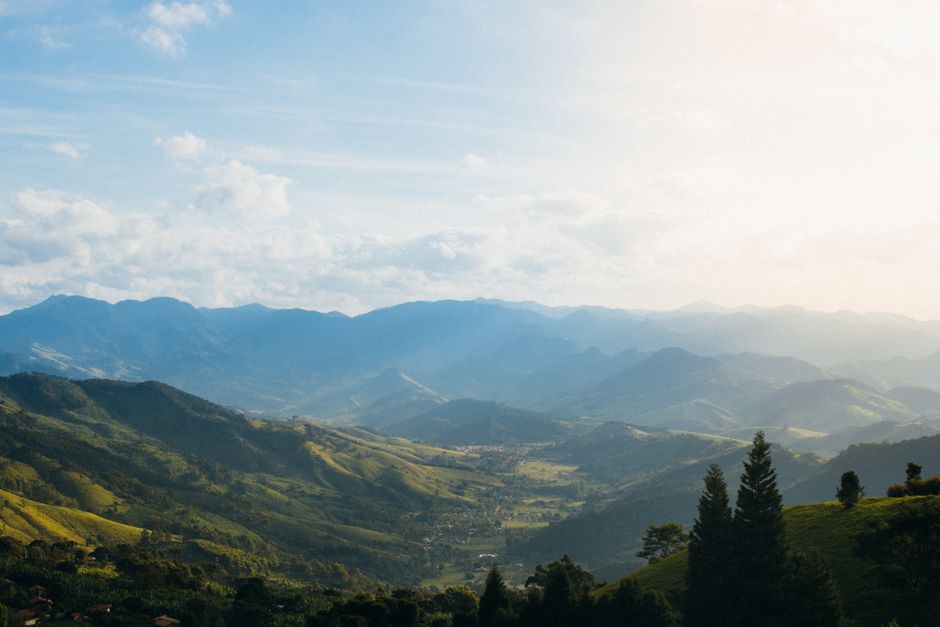
There is a moment on any walk when the land opens up and you want to hold the whole view in your hands. A camera can do that, but a sketch does something different. It forces you to decide what matters, and in that decision you learn how a landscape is actually put together.
Start by drawing a single horizon line. Everything else in the scene will hang from it. Mark where the ground meets the sky, and note whether it is flat, rolling, or broken by ridges. This one line tells you a lot about the place before you draw anything else. A low horizon gives the sky room to dominate. A high horizon pushes the land forward and makes it feel close.
Next, block in the big shapes. Do not outline every tree. Instead, group the darks and the lights. A wooded slope is one mass, not fifty individual trees. A lake is a single shape with a reflection inside it. Working in masses first keeps you from getting lost in detail and helps you see the overall structure of the view.
Water is where landscapes get interesting. A river bends, a pond reflects, a stream cuts a channel through the ground. Sketching water means sketching movement and reflection, not just a blue shape. Notice how the surface breaks the reflection of a tree into ripples, or how a current carries a line of foam. These small observations bring a scene to life.
Weather changes everything. The same hill looks completely different under a gray sky than under a clear one. Add a note about the weather to every landscape page, and if you can, sketch the same view under different conditions. A page of the same meadow in sun, mist, and rain becomes a study of how light and atmosphere transform a place.
Time matters too. Landscapes are not static. Sketch a riverbank in spring when the water is high and again in late summer when it has dropped. The shape of the land, the plants along the edge, and the color of the water all change. Your journal catches what a single photograph cannot.
Find a spot you can visit again and again. A hilltop, a bridge, a bend in a trail. Returning to the same view teaches you to see change, and change is where the real story of a landscape lives. The first time you sketch it, you see the shapes. The fifth time, you see how the light moves and how the seasons rewrite the scene.
Keep your landscape sketches loose. Nobody expects a finished painting from a field journal. A few confident lines and a note about the wind are worth more than an hour of fussing over a single tree. The goal is to remember the place, and to understand it a little better than you did before you sat down.
Landscapes are patient subjects. They will wait for you. All you have to do is show up with a pencil and the willingness to look.
